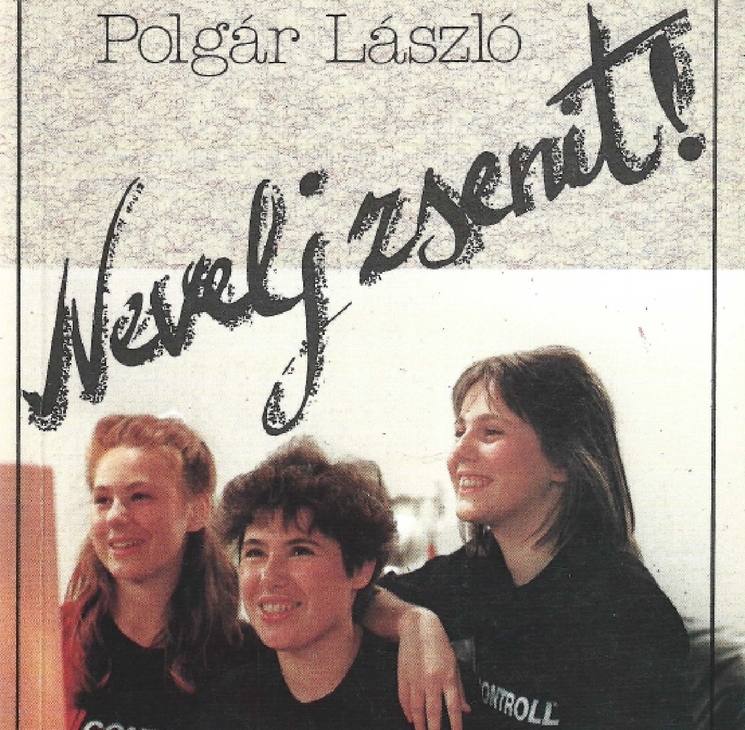
The book Raise a Genius! by László Polgár was introduced to me via a conversation with my friend Abhishek on the eve of me becoming a father.
My first impression on the premise "it is about a guy who as an experiment trains their children to be Grandmasters from early age" was that the book sounded awful, like training tigers to jump through rings of fire. However, understanding that you should not judge a book..., I decided to give it a chance.
Finding the book was not as straight forward as I thought. The first edition in 1989 was published in Hungarian, here, and later in the early 2000s it was translated to Esperanto, lastly this Esperanto translation was the stepping stone for the translation to English made by Gordon Tisher. The English version of the book can be found here as PDF, or here as EPUB1.
The book is casual interview to László, who is the father of Zsuzsa, Zsófia and Judit. The three sisters reached high competitive levels of chess, and two of them, Zsuzsa and Judit became Grandmasters at the age of 22 and 15 respectively. The interview touches a variety of topics such as "current" education systems, the value of learning foreign languages, early childhood development, Polgár approach to pedagogy, their family, their chess career.
One thing that I enjoyed is the focus on the happiness and the overall development of the children. Fortunately, it was not the tiger-through-rings-of-fire approach, but it was an integral, conscious, and full-time approach to raise a child, focused on encouraging in a methodical but playful way to master in a field (in this case chess). Unfortunately, that kind of approach is impossible for many families, in the case of the Polgár family, it was possible as both parents quit their jobs to dedicate completely to homeschooling their daughters, as this was required for the experiment, in addition both had higher education, László was an psychologist and Klára was a teacher, professions that were useful for homeschooling. An idea that I did not liked so much is that about "raising a genius" is that specialization on early age is needed. In this case, the child is too young to decide the field they want to become an expert, so it is the role of the parent to take (at least narrow) that decision. This contrast with the approach of giving the child freedom (space and time) to explore different areas and let them decide what to specialize in. For the Polgár sisters, it seems chess, as area of specialization, was offered to the daughters and they took it.
Some quotes of the book that I really liked:
"Genius = Labor + Luck Happiness = Labor + Luck + Love + Freedom"
"Genius is not born, genius is raised."
"[...] one can never achieve serious pedagogical results [...] through coercion."
"The first an essential condition for becoming happy is for one to want happiness. Many people want to make their children happy, want to see them thus, but they do not do enough, or even very little. They let themselves be guided by accidents of education. [...] one should approach and perform education very intentionally for happiness."
"Genius education [...] aims for the development of personality, happy people, and the development of socially and morally progressive individuals. Therefore I say: genius education, education for happiness, and humanism are unified things; one does not develop one without the others."
As an unwritten kind-of epilogue, months later, I noticed that there was a documentary on Judit Polgár, it is called Queen of Chess, I watched and it was amazing and heartwarming to listen to her talking on her chess career and her life, and how happy she considers herself.
-
I do most of my readings in a e-reader with KOReader, thus for better reading experience, I converted the PDF to the EPUB (with the free trial of Lighten PDF to EPUB. The conversion was not perfect, thus I had to manually edited the EPUB files with Calibre. On this journey I re-read the book, and noticed that pictures were missing, then I tracked down the Hungarian version of the book, extracted the images from it and added to the EPUB version. Please note that I don't speak Hungarian, translations are the Google translator outputs with minor (obvious) edits. ↩
Comments
comments powered by Disqus